
BRIVIACT® (brivaracetam) CV is a prescription medicine used to treat partial-onset seizures in people 1 month of age and older. It is not known if BRIVIACT is safe and effective in children younger than 1 month of age. 

BRIVIACT
for Adults

Why BRIVIACT

Get in on the moment with fewer partial-onset seizures

If you have been diagnosed with partial-onset seizures, you know the impact that epilepsy can have. Seizures can be unpredictable and can get in the way of everyday life and long-term plans.

If you are still having partial-onset seizures on your current medicine, ask yourself if you could be doing better. Achieving your personal best in seizure control could mean reducing the number of partial-onset seizures you are having. When taken alone or added to your current medicine, BRIVIACT may help reduce your partial-onset seizures.

Act now for the possibility of fewer partial-onset seizures.

Take action with BRIVIACT

Shown to reduce partial-onset seizures

BRIVIACT was proven to reduce partial-onset (focal) seizures.

Can be added to existing treatments or taken alone

BRIVIACT can be added on to your current antiseizure medicine(s), which means you won't have to give up the benefits of your current antiseizure medicine(s). It can also be taken alone if you are not currently taking any other antiseizure medications.

No titration required

Because titration is not required with BRIVIACT, you can start at the recommended dose right away from day 1.

Generally well tolerated

BRIVIACT was shown to be generally well tolerated in clinical trials and can be taken with other antiseizure medicines.

You and your doctor should discuss the possible benefits and risks of treatment with BRIVIACT.

BRIVIACT in clinical trials

  • BRIVIACT was added to 1 to 2 common antiseizure medicines
  • Some patients were also being treated with vagal nerve stimulation (VNS)
  • The most common side effects of BRIVIACT in adults include sleepiness, dizziness, feeling tired, and nausea and vomiting

Devin has managed his partial-onset seizures with BRIVIACT from 8th grade and on, with the guidance of his doctors. He has experienced fewer seizures ever since!

He takes action toward his goal of becoming a pediatric neurologist and doesn't let seizures stand in his way.

Devin, a real patient taking BRIVIACT for partial-onset seizures

Individual results may vary. Please see Important Safety Information and Full Prescribing Information.

Taking BRIVIACT

What to know about dosing

Start with the
full recommended dose

Adult starting dose:
50 mg twice a day (100 mg/day)
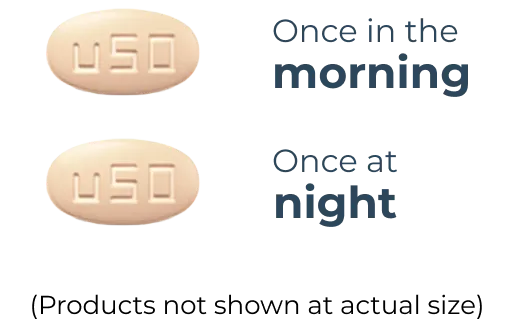
Your doctor will tell you how much BRIVIACT to take and when to take it

For adult patients 16 years of age and older, the recommended starting dose is 50 mg twice daily (100 mg per day)

BRIVIACT does not require titration

Because titration is not required with BRIVIACT, you can start at the recommended dose right away from day 1

How to take BRIVIACT

Swallow BRIVIACT tablets whole with a liquid. Do not chew or crush BRIVIACT tablets before swallowing

Take BRIVIACT with or without food

BRIVIACT is a daily treatment, so you must continue taking it until your doctor tells you to stop.

Important reminders:

  • Your healthcare provider may change your dose if needed
  • Do not stop BRIVIACT or change your dose without talking to your healthcare provider first
  • Do not take BRIVIACT if you are allergic to brivaracetam or any of the ingredients in BRIVIACT. See the Medication Guide for a complete list of ingredients in BRIVIACT
  • If your healthcare provider has prescribed BRIVIACT oral solution, be sure to ask your pharmacist for a medicine dropper or medicine cup to help you measure the correct amount of BRIVIACT oral solution. Do not use a household teaspoon or tablespoon. Ask your pharmacist for instructions on how to use the measuring device the right way
  • BRIVIACT injection can be given to you by intravenous (IV) infusion into your vein, as prescribed by your healthcare provider
  • If you take too much BRIVIACT, call your Poison Control Center at 1-800-222-1222 or go to the nearest emergency room right away

Explore your options for getting branded BRIVIACT

Find out how

ABOUT YOU

To be eligible for the BRIVIACT Savings Program, you must be a resident of the United States or Puerto Rico.
Select the statement that best describes you or the person you are representing (optional):
Are you or the person you are caring for taking (or going to be taking) BRIVIACT at the same time as another seizure treatment (optional)?

WAYS TO STAY INFORMED

Message and data rates may apply. Four (4) messages per month. Text “HELP” to 51590 for help. Text “STOPBRIV” to 51590 to stop all BRIVIACT messages. Text “STOP” to 51590 to stop all messages. See Terms and Conditions and Privacy Policy.

By submitting this form, you confirm that UCB has your permission to use your personal information to provide you with information and offers related to UCB on products, services and programs, and opportunities to participate in market research. You understand you may revoke your permission and participation in the program at any time by unsubscribing.

The information you provide will be used by UCB in accordance with our Privacy Policy and by parties acting on UCB’s behalf to send you information on BRIVIACT. View our Privacy Policy.

SIGN UP

Sign up to get the latest on BRIVIACT

Fill out the form below to receive more information on BRIVIACT.

You must be 18 years or older. If not, please have a parent or guardian complete the form for you.

The fields marked with an asterisk (*) are mandatory.

Are you signing up for yourself or as a caregiver?
As a caregiver, please fill out all information relevant to the patient you are representing.
Are you caring for:
Which of these best describes what brought you here today?
Message and data rates may apply. Four (4) messages per month. Text ‘HELP’ to 51590 for help. Text ‘STOPBRIV’ to 51590 to stop all BRIVIACT messages. Text ‘STOP’ to 51590 to stop all messages. See Terms and Conditions and Privacy Policy.
Are you or the person you are caring for (going to be) taking BRIVIACT at the same time as another seizure treatment?

By providing this information, you are representing that you are a U.S. resident at least 18 years old, and giving UCB and its business partners permission to send you information regarding your disease, as well as information on other related treatments, products and services, and for marketing and informational purposes. You understand that UCB or its business partners will not sell your name, address, email address, or any other information to another party for their own marketing use. You may remove yourself from the mailing list at any time by unsubscribing from your eNewsletters as well as reviewing the Privacy Policy.

Important Safety Information

What is BRIVIACT?

BRIVIACT® (brivaracetam) CV is a prescription medicine used to treat partial-onset seizures in people 1 month of age and older. It is not known if BRIVIACT is safe and effective in children younger than 1 month of age.

What is the most important information I should know about BRIVIACT?

BRIVIACT is a federally controlled substance (CV) because it can be abused or lead to dependence. Keep BRIVIACT in a safe place to prevent misuse and abuse. Selling or giving away BRIVIACT may harm others and is against the law.

Like other antiepileptic drugs, BRIVIACT may cause suicidal thoughts or actions in a very small number of people, about 1 in 500 people taking it.

Call a healthcare provider right away if you have any of these symptoms, especially if they are new, worse, or worry you:

  • thoughts about suicide or dying
  • attempts to commit suicide
  • new or worse depression
  • new or worse anxiety
  • feeling agitated or restless
  • panic attacks
  • trouble sleeping (insomnia)
  • new or worse irritability
  • acting aggressive, feeling angry, or being violent
  • acting on dangerous impulses
  • an extreme increase in activity and talking (mania)
  • other unusual changes in behavior or mood

Do not stop BRIVIACT without first talking to a healthcare provider.

  • Stopping BRIVIACT suddenly can cause serious problems.
  • Stopping a seizure medicine suddenly can cause seizures that will not stop (status epilepticus).

Who should not take BRIVIACT?

Do not take BRIVIACT if you are allergic to brivaracetam or any of the ingredients in BRIVIACT.

What should I tell my healthcare provider before starting BRIVIACT?

Before taking BRIVIACT, tell your healthcare provider about all of your medical conditions, including if you:

  • have or had depression, mood problems, or suicidal thoughts or behavior.
  • have liver problems.
  • have abused or been dependent on prescription medicines, street drugs, or alcohol.
  • are pregnant or plan to become pregnant. It is not known if BRIVIACT will harm your unborn baby.
  • are breastfeeding or plan to breastfeed. BRIVIACT passes into your breast milk.

What should I avoid while taking BRIVIACT?

Do not drive or operate machinery until you know how BRIVIACT affects you. BRIVIACT may cause drowsiness, tiredness, dizziness, and problems with your balance and coordination.

What are the possible side effects of BRIVIACT?

BRIVIACT may cause serious side effects, including:

  • See “What is the most important information I should know about BRIVIACT?”
  • Nervous system problems. Drowsiness, tiredness, and dizziness are common with BRIVIACT, but can be severe. See “What should I avoid while taking BRIVIACT?” BRIVIACT can also cause problems with balance and coordination.
  • Mental (psychiatric) symptoms. BRIVIACT can cause mood and behavior changes such as aggression, agitation, anger, anxiety, apathy, mood swings, depression, hostility, and irritability. Irritability and anxiety are common with BRIVIACT, and can be severe. People who take BRIVIACT can also get psychotic symptoms such as hallucinations (seeing or hearing things that are really not there), delusions (false or strange thoughts or beliefs), and unusual behavior.
  • Serious allergic reactions. Stop taking BRIVIACT and call your healthcare provider right away if you have any of these signs of a serious allergic reaction: swelling of your face, mouth, lips, gums, tongue, throat, or neck, or trouble breathing.
  • Serious skin rashes. BRIVIACT may cause a severe rash with blisters and peeling skin. This may occur around the mouth, nose, eyes, and genitals or over much of the body. A mild rash may become a serious reaction and may cause death. Call your healthcare provider right away if you have a rash, skin blisters, sores in the mouth, or hives. Do not stop taking BRIVIACT without first talking to your healthcare provider.

The most common side effects of BRIVIACT in adults include:

  • sleepiness
  • dizziness
  • feeling tired
  • nausea and vomiting

Side effects of BRIVIACT in children 1 month to less than 16 years of age are similar to those seen in adults.

These are not all the possible side effects of BRIVIACT. For more information, ask your healthcare provider or pharmacist. Tell your healthcare provider about any side effect that bothers you or that does not go away. Call your doctor for medical advice about side effects. You are encouraged to report negative side effects of prescription drugs to the FDA. Visit www.fda.gov/medwatch or call 1-800-FDA-1088. You may also report side effects to UCB, Inc. at UCBCares 844-599-CARES (2273).


We recognize that coronavirus may be top of mind. Our focus, as always, is the health and safety of our patients. Now, more than ever, we recommend speaking with your specialist on specific questions you may have regarding treatment and overall health. You can also contact our ucbCARES® team for product-specific questions directly at 1-844-599-2273. Hours of operation continue as Monday-Thursday, 8 AM-8 PM ET and Friday, 8 AM-5 PM ET.